


Blockchain security issues have become a major concern as analysts expect the global blockchain market to reach $40 billion by 2025 . Recent attacks have exposed crucial vulnerabilities despite the technology’s reputation for trustworthiness. Hackers exploited code flaws in smart contracts to steal over $600 million from Poly Network in 2021 . Ethereum Classic faced three 51% attacks in 2020 that cost currency holders $9 million through double transactions .
These blockchain vulnerabilities extend beyond isolated cases. Beosin’s 2023 report reveals that 51.8% of attacks came from smart contract vulnerabilities in blockchain incidents totaling $1.397 billion . Blockchain attacks have grown more sophisticated, and criminals now target the private keys used by blockchain participants through phishing schemes . CertiK’s Q3 2024 report shows that phishing and private key leaks led to losses exceeding $750 million across more than 150 incidents .
This piece dives into the hidden blockchain security risks that teams often miss. We’ll explore vulnerabilities that endanger blockchain implementations, from smart contract logic flaws to consensus exploits in proof-of-stake systems. The analysis covers ground attack examples that show why traditional security practices fail and offers practical strategies to protect blockchain networks against these emerging threats.
Why Blockchain Isn’t Inherently Secure
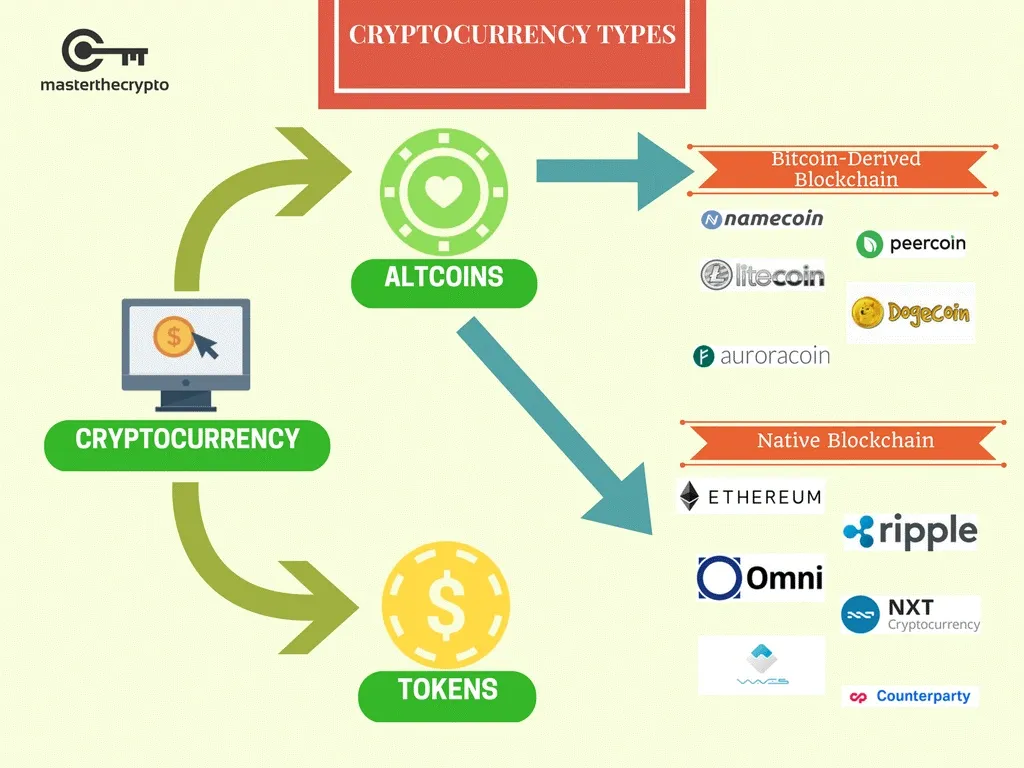
Image Source: Terranova Security
People commonly believe blockchain technology guarantees security by default. This isn’t true. While blockchain offers innovative features, security issues often arise because teams misunderstand its basic architecture and what it can do. These gaps in understanding create dangerous blind spots.
Decentralization vs. Centralized Entry Points
Decentralization stands as blockchain’s main selling point. Most implementations still contain vulnerable centralized parts. We focused mainly on exchanges and wallet services that create concentrated attack points. These undermine blockchain’s distributed security model. Thieves have stolen over $13 billion from centralized crypto exchanges since 2012. This shows a critical weakness.
Many blockchain applications depend on centralized Oracle services to connect with outside data sources. These Oracles become single points where the system can fail. Flash Loan attacks that manipulate Oracle price feeds serve as a good example. These attacks led to millions in losses. The Wormhole bridge hack shows this weakness clearly – attackers targeted centralized cross-chain bridges to steal approximately $325 million in February 2022.
Misconceptions About Immutability and Trust
The idea of blockchain immutability makes people complacent about security checks. In spite of that, records become permanent only after consensus confirmation. This leaves a critical window where transactions can be manipulated. The permanent nature of blockchain makes fixing errors or reversing fraud nearly impossible without the community agreeing to hard forks.
There’s another reason why people misunderstand “trustlessness.” Blockchain reduces our need to trust third parties. Yet it moves that trust to code, consensus mechanisms, and network participants. New vulnerabilities appear when code has flaws or someone manipulates consensus mechanisms. To name just one example, see the 2016 DAO hack. It resulted in $60 million in losses due to code problems, even though the blockchain worked as designed.
Overreliance on Cryptographic Assumptions
Blockchain security depends heavily on current cryptographic standards. These might not hold up against future technology advances. Quantum computing poses one of the most important threats to public-key cryptography that supports blockchain security. Experts think quantum computers could break current cryptographic standards within 5-10 years. This could compromise blockchain systems that rely on these standards.
Cryptographic implementations often hide subtle flaws. The Bitcoin pseudorandom number generator vulnerability found in 2013 let attackers predict wallet keys in certain conditions. Similar cryptographic implementation problems continue to affect blockchain projects.
The human factor in cryptography presents an overlooked risk. Users have lost about 20% of all Bitcoin (worth over $140 billion at current prices) forever because of misplaced private keys or forgotten passwords. This proves that even perfect cryptography fails when real people use it.
Blockchain’s security depends on network economics and game theory rather than just technical measures. Security models fail when the financial reward for attacking exceeds the cost. This explains why smaller blockchains with lower market values face 51% attacks more often than larger networks with stronger economic security.
8 Hidden Blockchain Security Vulnerabilities Most Teams Miss
Image Source: ResearchGate
Blockchain systems face many hidden vulnerabilities that often go unnoticed, even with the best security measures in place. Security experts keep finding weak points that put blockchain integrity and user assets at risk.
1. Smart Contract Logic Flaws and Reentrancy Bugs
Smart contract vulnerabilities are the biggest source of security breaches in blockchain ecosystems. Attackers can exploit bugs in smart contract logic to steal funds, run unauthorized actions, or change how things work [1]. The OWASP Smart Contract Top 10 (2025) shows access control flaws, logic errors, and reentrancy attacks are the most important vulnerabilities [2]. Reentrancy attacks happen when external contracts jump back into functions before updating contract states, which lets them withdraw funds multiple times [3]. These vulnerabilities led to USD 1.42 billion in losses from 149 documented incidents in 2024 alone [2]. Access control issues caused USD 953.20M in losses, while logic errors and reentrancy attacks resulted in USD 63.80M and USD 35.70M in losses [2].
2. Endpoint Vulnerabilities in Wallets and Devices
Devices that connect to blockchain networks create major security risks. Hackers can steal authentication info from compromised phones and apps, which might expose private keys [4]. Users often store their private keys on their devices without proper protection, making them easy targets [4]. Studies show wallet vulnerabilities, malware, cryptojacking, and human error are the main types of endpoint security problems [5]. These issues affect smart contracts, wallets, and how systems communicate, putting the whole blockchain ecosystem at risk [6].
3. Sybil Attacks in Low-Participation Networks
Sybil attacks let bad actors create multiple fake identities or nodes to take control of a network. These fake entities can mess with consensus, flood the network with transactions, or cut off real users [4]. Networks with low participation and weak validation systems are easy targets [4]. Stopping Sybil attacks becomes really hard in permissionless blockchains that don’t check identities [7]. Successful attackers might change transaction histories or fake consensus [8].
4. Routing Attacks on Blockchain Node Communication
Bad actors use routing attacks to break down blockchain’s communication structure. They try to split networks into isolated parts by cutting off communication between nodes [9]. During partitioning attacks, they break networks into separate chains, which can lead to double-spending and lost money [9]. Delay attacks work by holding up block delivery to specific nodes for long periods, making them hard to spot [9]. While these attacks don’t change the blockchain directly, they shake user confidence and make the system less reliable [10].
5. Insecure Key Management and Private Key Exposure
Private keys are the backbone of blockchain security and control assets through transaction signing [11]. People often handle them poorly—leaving them unencrypted, in unsafe places, or with weak protection [11]. A bug in Profanity’s vanity-address generator cost Wintermute USD 160.00 million in 2022 [11]. Chainalysis’s 2024 report reveals that compromised keys caused 43.8% of all hack-related theft—five times more than any other confirmed attack type [12].
6. Poorly Audited Third-Party Integrations
Third-party integrations create major weak points in blockchain systems. Many apps need external services for data, which adds risky dependencies [13]. These services often have downtime issues, slow response times, and need constant updates to work with vendor changes [14]. Smart contracts that connect to compliance databases or external data sources become targets if they’re not secured properly [13]. These integrations turn into prime targets without proper security checks.
7. Consensus Exploits in Proof-of-Stake Systems
Proof-of-Stake (PoS) blockchains use economic incentives that attackers can break under certain conditions. The security model fails if attackers can make more money than what they stake [15]. In 2023, attackers spent thousands to become Ethereum block producers and pulled off a USD 25.00 million stablecoin heist [15]. PoS also lets anyone participate in block production anonymously based on their financial stake, not their identity or reputation [15].
8. Insider Threats in Private and Consortium Chains
Private and consortium blockchains face unique risks from insider threats. Admins with special access could change records, break services, or leak sensitive data [1]. Multiple insiders might work together to compromise blockchain integrity and rewrite transaction histories [1]. About 90% of organizations worry about insider attacks [16]. Blockchain systems don’t deal very well with compromised insider nodes, which can manipulate transactions or add fake data [17].
How These Vulnerabilities Are Exploited in Real-World Attacks
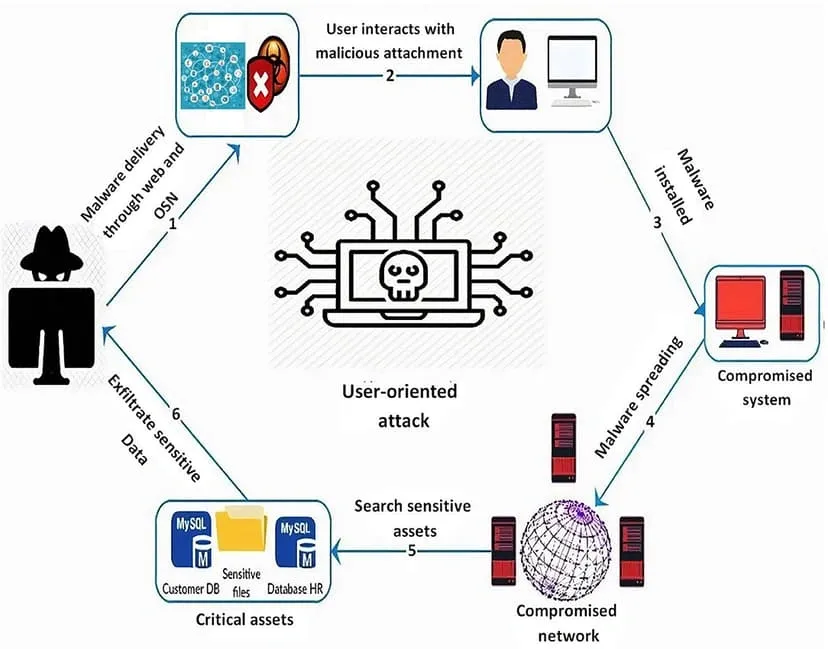
Image Source: Fiveable
Real-life blockchain attacks show how security flaws can lead to massive financial losses. These examples reveal how exploit techniques have become more sophisticated in blockchains of all types.
DAO Hack: Reentrancy in Smart Contracts
The 2016 DAO hack changed blockchain security forever. Attackers found a critical flaw in The DAO’s smart contract code. The contract controlled about 14% of all Ethereum that existed at the time [18]. The attack happened just three months after launch and thieves stole USD 60.00 million worth of ether [18].
The attackers used a flaw in the way the contract handled withdrawals. The code sent funds to users before it updated their account balances [19]. This let attackers repeatedly call the withdraw function before any balance updates. They drained funds without proper deductions from their accounts [19]. The damage was so bad that Ethereum ended up doing something controversial – they rolled back the blockchain’s history with a hard fork to give investors their money back [18].
Poly Network Exploit: Cross-chain Vulnerability
Poly Network faced one of the biggest security breaches in decentralized finance history. In August 2021, attackers stole over USD 610.00 million from Ethereum, Binance Smart Chain, and Polygon blockchains [20]. They found weaknesses in Poly Network’s cross-chain protocol that aids cryptocurrency exchanges between different blockchains [21].
The hacker got past security checks by creating fake data, including a false block header and validator signature [22]. The story took an unusual turn when the attacker gave back all stolen funds within 15 days after Poly Network’s public appeals [20]. In fact, the hacker said they only wanted to expose security flaws. They turned down a USD 500,000 bug bounty and a job offer from Poly Network [21].
Bitcoin Gold: 51% Attack Case Study
Bitcoin Gold (BTG) took a heavy hit from 51% attacks in January 2020. Attackers double-spent BTG worth about USD 70,000 [23]. They made deep changes to the blockchain in two attacks. The first attack removed 14 blocks and added 13, letting thieves double-spend 1,900 BTG worth USD 19,000. The second removed 15 blocks and added 16, double-spending 5,267 BTG worth USD 53,000 [24].
These attacks worked because the thieves controlled more than half the network’s computing power. This gave them the ability to rewrite transaction history [23]. Each attack cost just USD 1,700 based on Nicehash market prices [24]. The low cost of attacking smaller blockchains shows why proper confirmation rules and economic incentives matter so much for blockchain security [24].
Why Traditional Security Practices Fall Short
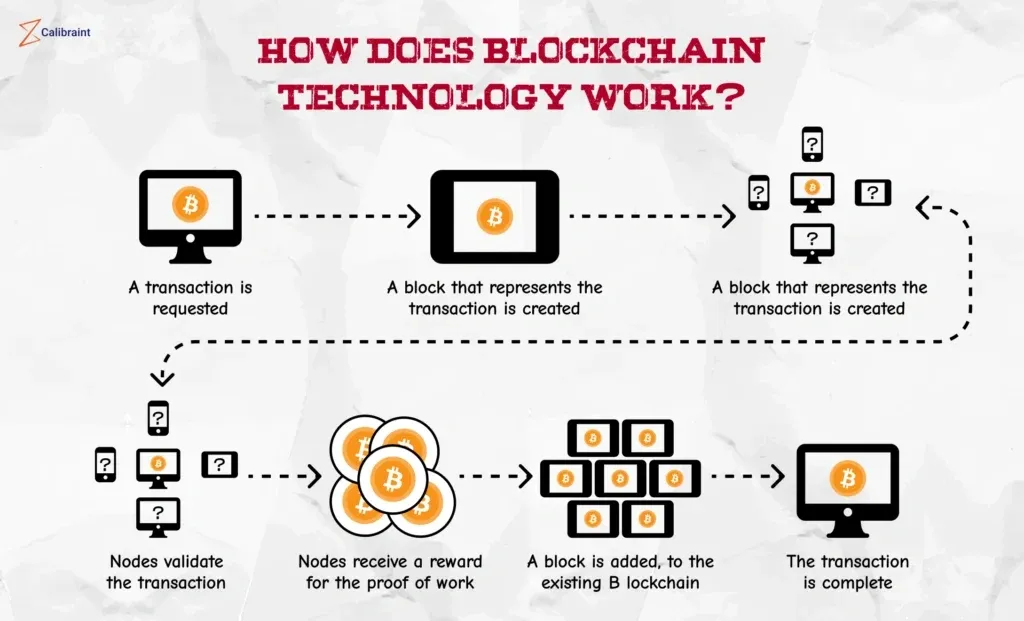
Image Source: Calibraint
Blockchain environments expose protection gaps that malicious actors exploit because traditional cybersecurity approaches do not work well.
Lack of Blockchain-Specific Threat Models
Modern blockchain environments need solutions that lack the functionality and adaptability [25]. Security teams use general approaches that do not consider blockchain’s unique architecture and attack vectors. The current methods seem diverse and flexible but only scratch the surface when describing system models and threats [26]. Teams must adapt existing frameworks like OWASP because blockchain security guidance remains limited. These frameworks were not built with distributed ledger technologies in mind [26].
Inadequate Penetration Testing for Smart Contracts
Automated tools and checklist-based assessments miss logic flaws, edge-case exploits, and behavioral vulnerabilities that standard security audits cannot catch [27]. Auditors struggle to identify new threats they have never seen before [28]. The challenge becomes harder when auditors get just 2-4 weeks to review tens of thousands of code lines [28]. The audits look at isolated code instead of the protocol’s ecosystem. This leaves business logic flaws, dependency assumptions, and cross-chain risks unaddressed [28].
Failure to Monitor Node Behavior in Real Time
Telling legitimate from malicious on-chain behavior has become a major challenge [29]. Legitimate arbitrage strategies look similar to coordinated exploits [29]. Bad actors can cause damage before anyone notices their actions [29]. Cross-chain activities make things worse by spreading visibility across multiple protocols [29].
Mitigation Strategies for Blockchain Security Risks

Image Source: Rapid Innovation
Blockchain security needs multiple layers of protection to guard against both technical and operational weaknesses. The right security measures can significantly lower the risk of attacks.
Implementing Multi-Signature Wallets
Multi-signature wallets make transactions more secure by needing multiple people to approve them [30]. These wallets spread control across different parties instead of relying on a single key, which removes any single point of failure [31]. Large institutions find this setup especially useful when managing their cryptocurrency [30]. Companies should set up multi-sig systems to create better accountability through multi-person approvals [30].
Regular Smart Contract Audits and Formal Verification
Smart contracts need mathematical proof to show they work correctly [32]. Developers turn program features into math formulas and use special tools to check if these formulas are true [32]. Expert teams review code manually and run automated scans [33]. Both methods work together to give a complete security check [32].
Zero Trust Architecture for Blockchain Networks
Zero Trust Architecture follows a simple rule: “never trust, always verify.” Every user must prove who they are, no matter where they connect from [34]. This creates a blockchain environment where data needs verification before anyone can trust it [35]. The system stops attackers from moving sideways through the network [34].
Using Hardware Security Modules (HSMs) for Key Storage
Hardware Security Modules keep encryption keys safe in special FIPS-certified devices [36]. These dedicated processors handle everything about key management securely [36]. HSMs help blockchain apps by keeping private keys away from vulnerable server memory [37].
Continuous Monitoring and Anomaly Detection
Live monitoring helps catch suspicious blockchain activity right away [38]. Users get automatic alerts about possible threats [38]. AI-powered tools analyze patterns in transactions and spot unusual behavior before attackers can strike [38].
Conclusion
Blockchain technology revolutionizes many industries, but security vulnerabilities remain the biggest problem for organizations that implement these systems. Our analysis of hidden blockchain security issues reveals weaknesses that put blockchain networks’ integrity and reliability at risk. Smart contract vulnerabilities, especially reentrancy bugs and logic flaws, have caused billions in losses. On top of that, endpoint vulnerabilities, consensus mechanism exploits, and centralized components create dangerous attack surfaces that weaken blockchain’s distributed security model.
Ground attacks show how theoretical vulnerabilities lead to devastating financial consequences. The DAO hack exposed critical smart contract flaws, while the Poly Network exploit revealed cross-chain vulnerabilities that let attackers steal over $610 million. Bitcoin Gold’s 51% attack proved how smaller blockchains face higher risks when economic incentives favor attackers. These cases prove that blockchain security needs more than technical measures – it depends on proper economic incentives and human factors.
Organizations don’t deal very well with blockchain-specific threats and architectural complexities through traditional security approaches. They need complete mitigation strategies designed for blockchain environments. Multi-signature wallets remove single points of failure, while formal verification proves smart contract functionality mathematically. Zero-trust architecture, hardware security modules for key storage, and continuous monitoring systems add essential protection against evolving threats.
Blockchain security’s future depends on accepting that immutability and decentralization can’t guarantee protection alone. Teams must think over and manage to keep security through rigorous testing, auditing, and monitoring. Blockchain technology shows great promise, but organizations must tackle these hidden vulnerabilities before widespread adoption succeeds. Moving forward requires technological innovation and a new security mindset – treating blockchain implementations as complex networks that need strong, multi-layered protection strategies.
Key Takeaways
Blockchain security requires proactive vigilance beyond the technology’s reputation for trustworthiness. These insights reveal critical vulnerabilities and actionable protection strategies that development teams must prioritize.
• Smart contract vulnerabilities cause 51.8% of blockchain attacks – Reentrancy bugs and logic flaws resulted in $1.42 billion losses in 2024 alone
• Traditional security practices fail blockchain environments – Standard threat models lack blockchain-specific functionality and scalability requirements
• Private key management remains the weakest link – 43.8% of stolen funds stem from compromised keys, more than any other attack vector
• Multi-layered defense strategies are essential – Implement multi-signature wallets, formal verification, HSMs, and continuous monitoring for comprehensive protection
• Economic incentives drive attack success – When financial rewards exceed attack costs, security models break down regardless of underlying technology
The reality is stark: blockchain’s security depends on deliberate design and continuous maintenance, not inherent technological properties. Organizations must treat blockchain implementations as complex networks requiring robust, multi-layered protection strategies rather than inherently secure systems.
FAQs
Q1. What are the most common security threats to blockchain systems? The most prevalent threats include smart contract vulnerabilities (like reentrancy bugs), 51% attacks on smaller networks, phishing attacks targeting private keys, and routing attacks that disrupt node communication. Insider threats in private blockchains and poorly audited third-party integrations also pose significant risks.
Q2. Is blockchain technology inherently secure? No, blockchain is not inherently secure. While it offers certain security benefits through decentralization and cryptography, it still has vulnerabilities. These include centralized entry points, smart contract flaws, and consensus mechanism exploits. Security depends on proper implementation and ongoing maintenance.
Q3. How can organizations protect against blockchain security vulnerabilities? Organizations can implement multi-signature wallets, conduct regular smart contract audits and formal verification, use hardware security modules for key storage, and employ continuous monitoring with anomaly detection. Adopting a zero-trust architecture for blockchain networks is also recommended.
Q4. Why do traditional security practices fall short in blockchain environments? Traditional security approaches often lack blockchain-specific threat models and are inadequate for smart contract penetration testing. They also struggle with real-time monitoring of node behavior across decentralized networks. Blockchain’s unique architecture requires specialized security strategies.
Q5. What was the impact of the DAO hack on blockchain security? The DAO hack in 2016 resulted in the theft of about $60 million worth of Ethereum due to a reentrancy vulnerability in a smart contract. This incident highlighted the critical importance of smart contract security and led to significant changes in how the blockchain community approaches code audits and vulnerability assessments.
References
[1] – https://www.trendmicro.com/vinfo/us/security/news/cybercrime-and-digital-threats/unchaining-blockchain-security-part-3-exploring-the-threats-associated-with-private-blockchain-adoption
[2] – https://owasp.org/www-project-smart-contract-top-10/
[3] – https://www.cobalt.io/blog/smart-contract-security-risks
[4] – https://nordlayer.com/blog/blockchain-security-issues/
[5] – https://onlinelibrary.wiley.com/doi/abs/10.1002/cpe.8158
[6] – https://www.ijcna.org/abstract.php?id=4521
[7] – https://www.sciencedirect.com/science/article/abs/pii/S1389128624007229
[8] – https://www.lightspark.com/glossary/sybil-attack-in-crypto
[9] – https://www.ledger.com/academy/glossary/routing-attack
[10] – https://keepnetlabs.com/blog/what-is-blockchain-security-common-blockchain-security-challenges
[11] – https://www.certik.com/resources/blog/private-key-public-risk
[12] – https://blog.trailofbits.com/2025/06/25/maturing-your-smart-contracts-beyond-private-key-risk/
[13] – https://www.techtarget.com/searchsecurity/post/How-blockchain-can-support-third-party-risk-management
[14] – https://www.unit21.ai/blog/third-party-integrations-how-they-play-into-crypto-risk-compliance-data-infrastructure
[15] – https://stellar.org/blog/ecosystem/proof-of-stake-vs-proof-of-agreement-stellars-security-edge
[16] – https://www.securing.pl/en/blockchain-new-types-of-insider-threat/
[17] – https://par.nsf.gov/servlets/purl/10289916
[18] – https://www.gemini.com/cryptopedia/the-dao-hack-makerdao
[19] – https://blog.chain.link/reentrancy-attacks-and-the-dao-hack/
[20] – https://en.wikipedia.org/wiki/Poly_Network_exploit
[21] – https://www.certik.com/resources/blog/poly-network-exploit
[22] – https://www.halborn.com/blog/post/explained-the-poly-network-hack-july-2023
[23] – https://cointelegraph.com/news/bitcoin-gold-blockchain-hit-by-51-attack-leading-to-70k-double-spend
[24] – https://gist.github.com/metalicjames/71321570a105940529e709651d0a9765
[25] – https://threatmodeler.com/glossary/blockchain-security-and-threat-modeling/
[26] – https://www.researchgate.net/publication/389757654_A_Threat_Modeling_Approach_for_Blockchain_Security_Assessment
[27] – https://fort1.com.au/smart-contract-penetration-testing-in-2025-why-standard-security-audits-are-no-longer-enough/
[28] – https://www.olympix.ai/blog/smart-contract-audit-limitations-why-audited-doesnt-mean-secure
[29] – https://www.chainalysis.com/blog/blockchain-security/
[30] – https://www.bitgo.com/resources/blog/what-is-a-multi-signature-wallet/
[31] – https://www.coinbase.com/learn/wallet/what-is-a-multi-signature-multi-sig-wallet
[32] – https://www.certik.com/resources/blog/what-is-formal-verification
[33] – https://www.openware.com/news/articles/smart-contract-audits-an-implementation-of-security-in-blockchain-projects
[34] – https://www.researchgate.net/publication/387984668_Blockchain-Enabled_Zero_Trust_Architecture_for_Privacy-Preserving_Cybersecurity_in_IoT_Environments
[35] – https://www.sciencedirect.com/science/article/pii/S2096720924000459
[36] – https://cpl.thalesgroup.com/encryption/hardware-security-modules
[37] – https://www.fortinet.com/resources/cyberglossary/hardware-security-module
[38] – https://www.veritasprotocol.com/blog/the-benefits-of-real-time-blockchain-monitoring-for-security?f01f1685_page=27