

AI music generators are transforming how people create music by using artificial intelligence to turn text descriptions into complete songs. These tools can produce original tracks in any genre, from pop and rock to classical and jazz, without requiring musical training or expensive equipment. AI music generators like Suno, MusicGPT, and AIVA can create professional-quality instrumental tracks and full songs with lyrics in just seconds, making music production accessible to anyone.
The technology works by analyzing millions of existing songs to learn patterns in melody, harmony, rhythm, and structure. Users simply type what they want, such as “upbeat pop song about summer” or “calm piano piece for meditation,” and the AI creates original music based on that description. Many platforms offer royalty-free tracks that can be used commercially without licensing issues.
These generators serve content creators, marketers, game developers, and hobbyists who need custom music quickly and affordably. Professional musicians also use AI tools to overcome creative blocks and generate new ideas for their compositions. The technology continues to improve, offering more customization options and better audio quality than ever before.
Key Takeaways
- AI music generators create original songs from text prompts in seconds without requiring musical skills or training
- These tools produce royalty-free tracks suitable for commercial use in videos, games, podcasts, and marketing content
- Musicians and content creators use AI generators to spark creativity and quickly produce professional-quality background music
How AI Music Generators Work

AI music generators use machine learning algorithms to analyze thousands of musical compositions and learn patterns in melodies, rhythms, and harmonies. These systems can create original songs from text prompts, convert lyrics into complete musical arrangements, and structure compositions with verses, choruses, and bridges.
AI Song Generation Technologies
AI music generators rely on deep learning methods that process musical data similar to how the human brain works. These systems analyze millions of existing songs to understand musical relationships and patterns.
Neural networks form the core technology behind AI song generators. They study chord progressions, instrument combinations, and melodic structures across different genres like pop, rock, classical, and jazz.
Text-to-music models work through joint embeddings that connect written descriptions with musical features. This process is more complex than image generation because text descriptions of music can map to many different musical outcomes.
Modern AI systems use transformer models to generate music tokens sequentially. These tokens represent different aspects of sound, from basic acoustic details to long-term musical coherence.
The most advanced 2025 systems combine multiple approaches to create music that sounds both technically sophisticated and emotionally engaging. They can compose entirely original works rather than just remixing existing patterns.
Music Creation from Text and Lyrics
AI music generators convert text prompts into musical compositions through specialized encoding systems. Models like MusicLM use three different types of tokens to represent various musical elements.
Text-conditioning allows users to describe the desired music style, mood, and instruments. For example, a prompt might request “an uplifting piano melody with jazz influences.”
The AI processes these descriptions using text-audio joint embeddings that link written words to specific musical characteristics. This creates a bridge between human language and musical elements.
Lyrics to music conversion works by analyzing both the emotional content and rhythmic patterns in the text. The AI matches syllable counts to musical beats and aligns emotional themes with appropriate melodies and harmonies.
Some systems also accept melodic inputs like humming or whistling. These audio sketches provide additional guidance for the AI to follow specific melodic contours while generating the full arrangement.
Song Structure and Arrangement
AI music generators create complete songs by understanding traditional musical structures like verses, choruses, and bridges. They learn these patterns from analyzing thousands of existing compositions across different genres.
Token interleaving patterns help AI systems organize musical elements in time. These patterns determine how different instruments, melodies, and rhythms combine throughout a song.
Most AI systems generate music in predetermined lengths, such as 30-second segments. However, newer models use timing-conditioning to create songs of specific durations by learning from the original lengths of training tracks.
The AI arranges instruments and vocals by understanding their typical roles in different musical styles. It places drums and bass in rhythmic foundations while layering melodies and harmonies above them.
Hierarchical generation allows AI to plan song structure at multiple levels simultaneously. It considers both the overall arrangement and fine acoustic details to create cohesive musical pieces.
Key Features of AI Music Generators
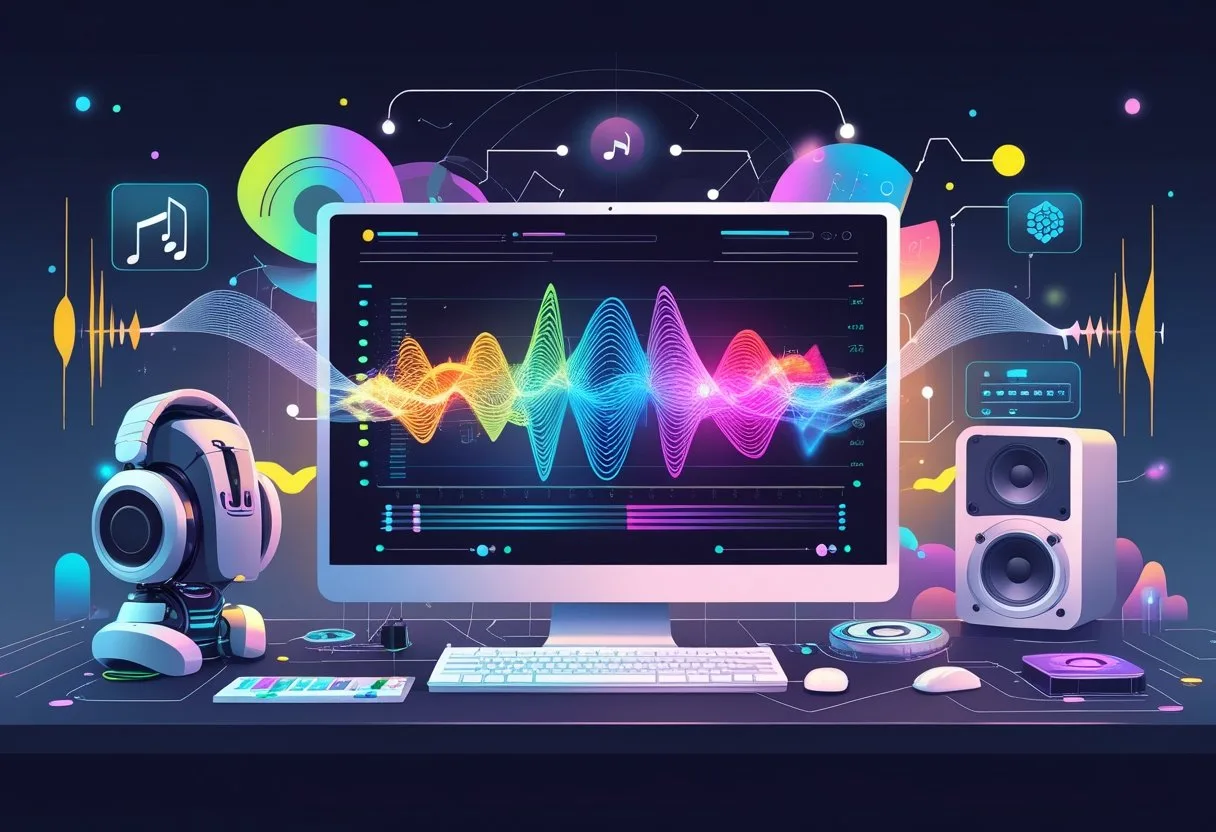
Modern AI music generators offer three core capabilities that make music creation accessible to everyone. Users can transform written descriptions into full compositions, create instrumental backing tracks, and generate original song lyrics automatically.
Text to Music Capabilities
Text to music functionality allows users to create complete songs by simply typing descriptions of what they want. Users can input prompts like “upbeat pop song for summer” or “relaxing piano music for meditation” to generate custom tracks.
The AI music generators process these text inputs within seconds, producing professional-quality audio files. Most platforms support various genres including pop, rock, classical, electronic, and cinematic styles.
Popular text to music features include:
- Style selection (jazz, folk, hip-hop, ambient)
- Mood customization (happy, sad, energetic, calm)
- Tempo control (slow, medium, fast)
- Instrument preferences (piano, guitar, drums, strings)
Users can refine their prompts to get more specific results. Adding details about instruments, energy levels, or intended use helps the AI create more targeted compositions.
Instrumental Versions and Tracks
AI music generators excel at creating instrumental versions of songs and standalone instrumental tracks. These tools can remove vocals from existing songs or generate completely new instrumental compositions.
The vocal removal feature helps create karaoke versions and backing tracks for musicians. Users can upload songs and separate vocals from instruments automatically.
Key instrumental capabilities:
- Stem separation: Isolates drums, bass, vocals, and other elements
- Loop creation: Makes repeating musical sections for videos or games
- Background music: Generates tracks for podcasts, YouTube videos, and presentations
- Remix tools: Transforms existing songs into different styles
Content creators use these instrumental tracks for video backgrounds, podcast intros, and social media content. The tracks are typically royalty-free for commercial use.
Lyrics Generation Tools
Song lyrics generators create original written content that matches specific themes, moods, or topics. Users input basic ideas and the AI produces complete verses, choruses, and bridge sections.
These lyrics to music tools work alongside melody generators to create full songs. Users can input existing lyrics or generate new ones from scratch.
Lyrics generation features:
- Theme-based writing (love, adventure, motivation, nostalgia)
- Rhyme scheme control (ABAB, AABB, free verse)
- Song structure templates (verse-chorus-bridge format)
- Genre-specific language (pop, rap, country, folk styles)
The AI analyzes rhythm patterns to ensure lyrics fit musical arrangements. Users can edit and customize the generated lyrics before creating the final song.
Some platforms combine lyrics generation with melody creation automatically. This produces complete songs with both words and music from a single text prompt.
Audio Quality and Customization Options
Modern AI music generators deliver high-quality audio output with extensive customization features. These tools provide multiple format options and professional-grade sound quality that rivals traditional music production.
Audio Output Formats
AI music generators typically offer multiple audio formats to meet different needs. Most platforms export tracks in MP3 format for standard use and streaming applications.
Many professional AI music tools also provide MP4 video outputs with visual elements. This feature helps content creators who need both audio and video components for their projects.
Higher-end generators support WAV files for professional production work. WAV format preserves full audio quality without compression, making it ideal for further editing or mastering.
Some platforms offer additional formats like FLAC or AAC. These options give users flexibility based on their specific technical requirements and intended use cases.
Professional Sound Quality
Top AI music generators in 2025 produce audio that matches professional studio standards. The technology has advanced significantly to eliminate the robotic or artificial sound that plagued earlier versions.
Most leading platforms generate tracks at 44.1 kHz sample rates with 16-bit or 24-bit depth. This specification ensures broadcast-quality audio suitable for commercial applications.
The AI algorithms now create natural-sounding instruments and vocals. Advanced neural networks analyze thousands of professional recordings to replicate authentic timbres and musical expressions.
Many generators include automatic mastering features. These tools apply compression, EQ, and limiting to create polished, radio-ready tracks without additional post-production work.
Customization of Genre, Mood, and Style
Good AI music generators provide extensive options for selecting genres, adjusting tempo and key, choosing specific instruments, and modifying song structures. Users can specify exact musical styles from classical to electronic dance music.
Genre Selection Options:
- Pop and rock variations
- Classical and orchestral
- Electronic and ambient
- Jazz and blues
- World music styles
Mood customization allows users to create tracks with specific emotional tones. Options typically include energetic, calm, mysterious, or uplifting atmospheres that match project requirements.
Tempo and key adjustments give users precise control over musical characteristics. Most platforms allow BPM changes from slow ballads to fast-paced tracks, plus major and minor key selections.
Instrument selection features let users choose specific sounds or ensembles. Options range from solo piano pieces to full orchestral arrangements with multiple instrument layers.
Licensing, Royalty, and Commercial Use
AI music generators offer different licensing models that determine how users can legally use generated tracks. Most platforms provide royalty-free music with commercial licenses through subscription tiers, while others require separate purchases for business use.
Royalty-Free Music Policies
Royalty-free music means users pay once and can use tracks without ongoing royalty payments. Most AI music platforms offer this model through their paid plans.
Creator-focused AI music generators typically include commercial rights in their subscriptions. Users can monetize content on YouTube, podcasts, and social media without additional fees.
Different subscription levels provide varying usage rights. Basic tiers often cover online content creation. Higher tiers expand to include client work and advertising campaigns.
Some platforms limit track downloads per month. Others offer unlimited generation with clear licensing terms. Users should verify specific usage rights before publishing content commercially.
Free tiers usually restrict usage to personal projects only. Commercial applications require paid subscriptions with proper licensing documentation.
Commercial License Options
Commercial licenses allow businesses to use AI-generated music in revenue-generating projects. Enterprise-level platforms offer the most comprehensive commercial rights.
Standard commercial licenses typically include:
- YouTube monetization
- Podcast advertising
- Social media campaigns
- Client video projects
Premium commercial licenses expand to cover:
- Broadcast television
- Film soundtracks
- Large-scale advertising
- Streaming platform distribution
Some platforms offer custom licensing for specific commercial needs. These agreements provide full ownership rights and exclusive usage terms.
Businesses should match their license type to intended use cases. Using music beyond license terms can result in copyright violations and financial penalties.
Workflow and User Experience
Most AI music generators follow streamlined workflows that prioritize speed and simplicity, though access levels and output options vary significantly between platforms. Users typically encounter different generation speeds, feature limitations, and integration capabilities depending on their chosen service tier.
Priority Generation Queue
AI music platforms manage user requests through queue systems that prioritize paid subscribers over free users. Premium users on platforms like Musicful receive faster processing times and immediate access to generation servers.
Free tier users often face longer wait times during peak usage periods. Some platforms display estimated wait times, while others process requests in the background without updates.
Queue Management Features:
- Real-time position tracking
- Estimated completion times
- Batch processing for multiple requests
- Priority escalation for urgent projects
Advanced platforms allow users to queue multiple generations simultaneously. This feature helps content creators prepare several tracks while working on other tasks.
Free vs. Paid Access
Free versions of AI music generators typically impose strict limitations on generation quantity and audio quality. Most platforms offer 30-60 second clips with watermarks or reduced bitrates for unpaid users.
Common Free Tier Restrictions:
- Limited daily generations (3-10 tracks)
- Lower audio quality (128kbps vs 320kbps)
- Watermarked downloads
- Basic genre selection only
Paid subscriptions unlock commercial licensing, extended track lengths, and premium features. Professional plans from services like AIVA include full copyright ownership and unlimited downloads.
Subscription tiers often scale with usage needs. Individual creators might pay $10-20 monthly, while commercial users face $50-200+ fees for enterprise features.
Download and Sharing
Most AI music generators provide multiple export formats including MP3, WAV, and MIDI files. Platforms like Soundful offer stem separation for producers who need individual instrument tracks.
Standard Download Options:
- Audio formats: MP3 (320kbps), WAV (44.1kHz), FLAC
- Project files: MIDI, stems, loops
- Quality settings: Studio, streaming, demo versions
- Metadata: Embedded titles, genres, licensing info
Cloud storage integration allows direct uploads to Google Drive, Dropbox, or professional audio libraries. Some platforms maintain user libraries for easy access to previously generated content.
Social sharing features let creators post tracks directly to streaming platforms or collaborate with team members through shared workspaces.
Integration with Other Creative Tools
Modern AI music generators connect with popular digital audio workstations through plugins or direct file export. Advanced users can export tracks from platforms like Musicful for further refinement in traditional production software.
Common Integration Methods:
- VST/AU plugin compatibility
- Direct DAW export (Logic Pro, Ableton, Pro Tools)
- API connections for custom workflows
- Video editing software sync
Many platforms offer timeline synchronization for video projects. Users can generate music that matches specific scene lengths or emotional beats within their footage.
Browser-based generators integrate with web applications through embed codes or API calls. This functionality helps developers incorporate AI music directly into apps, games, or websites without complex technical implementation.
Applications and Use Cases
AI music generators and AI song generators serve diverse industries from entertainment to marketing. These tools create custom soundtracks for videos, interactive experiences, and promotional campaigns without requiring traditional music production resources.
Content Creation for Video and Social Media
YouTube creators use AI music generators to produce original background tracks for their videos. This eliminates copyright concerns that come with using existing songs.
TikTok and Instagram content creators benefit from AI-generated music that matches their video length and mood. The technology allows them to create unique soundtracks in minutes rather than hours.
Key advantages for content creators:
- No licensing fees or copyright issues
- Custom length tracks that fit exact video duration
- Multiple genre options to match content style
- Quick turnaround for frequent posting schedules
Podcast producers use AI music generators for intro and outro segments. The tools can create consistent branding music that reflects the show’s personality.
Content creators can generate custom music with minimal musical training, making professional-quality audio accessible to everyone.
Music for Games and Interactive Environments
Game developers integrate AI music generators to create adaptive soundtracks. The music changes based on player actions and game states.
Indie game studios find AI song generators particularly valuable due to budget constraints. They can produce full soundtracks without hiring composers or purchasing expensive licenses.
Common gaming applications:
- Background ambient music for exploration scenes
- Action-packed tracks for combat sequences
- Emotional music for story moments
- Looping tracks that don’t become repetitive
Virtual reality experiences use AI-generated music to enhance immersion. The technology creates spatial audio that responds to user movement and interactions.
Mobile game developers appreciate the speed of AI music generation. They can test different musical styles during development phases quickly.
Custom Tracks for Marketing and Events
Marketing agencies use AI music generators for commercial advertisements. These tools can create professional-quality music in minutes while staying within tight campaign budgets.
Corporate events benefit from custom-generated music for presentations and videos. Companies avoid licensing complications while maintaining brand consistency.
Marketing use cases include:
- Product launch videos
- Social media advertising campaigns
- Corporate training materials
- Trade show presentations
Wedding planners and event coordinators use AI song generators for personalized ceremonies. They create unique processional music and reception tracks tailored to client preferences.
Small businesses leverage AI music generation for promotional videos and website content. The technology provides professional audio branding without the expense of hiring composers or purchasing stock music libraries.
Frequently Asked Questions
AI music generators use complex algorithms to transform text descriptions into complete musical compositions. These tools can produce royalty-free tracks across multiple genres with various input parameters and output formats.
How does an AI music generator compose original music?
AI music generators convert text descriptions into music using advanced deep learning models. The system analyzes patterns from millions of existing songs to understand musical structure, harmony, and rhythm.
Users simply describe what they want to hear in plain text. The AI then creates a unique audio track based on that description.
The technology uses neural networks trained on vast datasets of musical compositions. These networks learn relationships between different musical elements like melody, chord progressions, and instrumentation.
What are the typical input parameters for crafting a piece using an AI music generator?
Most AI music generators accept simple text prompts describing the desired musical style and mood. Users can specify genre, tempo, instrumentation, and vocal characteristics in their descriptions.
Eleven Music allows users to control genre, style, vocals, and lyrics in multiple languages. The platform responds to natural language descriptions without requiring technical music knowledge.
Common parameters include musical genre, tempo range, vocal type, and instrumental preferences. Advanced platforms also accept mood descriptors, cultural influences, and specific musical techniques.
Some generators offer dropdown menus for genre selection. Others rely entirely on text-based descriptions for maximum creative flexibility.
Can AI music generators create compositions in any musical genre?
Modern AI music generators support an extensive range of musical styles and genres. Popular platforms offer pop, classical, jazz, rock, electronic, and hip-hop styles, along with text-based custom generation.
Eleven Music generates any musical style from cinematic orchestral to modern electronic. The platform adapts to specific creative visions across cultural and temporal boundaries.
Generators can produce traditional genres like blues, country, and folk music. They also handle contemporary styles including trap, EDM, and indie rock.
Regional and cultural music styles are increasingly supported. Many platforms can generate flamenco, reggaeton, afrobeats, and other world music genres.
What is the difference between MIDI and waveform output in AI-generated music?
MIDI output contains digital instructions that tell instruments what notes to play and when. This format allows for easy editing of individual musical elements like pitch, timing, and instrument selection.
Waveform output produces actual audio files ready for immediate playback. These files contain the final mixed audio but offer limited editing capabilities compared to MIDI.
MIDI files are smaller in size and work with digital audio workstations for further production. Musicians can modify individual tracks, change instruments, and adjust arrangements.
Waveform formats like MP3 and WAV provide broadcast-ready audio for immediate use. These formats suit content creators who need finished tracks without additional editing.
How do AI music generators ensure the originality of the pieces they create?
AI music generators create original compositions by combining learned musical patterns in novel ways. The systems generate new arrangements rather than copying existing songs directly.
Training datasets teach AI systems general musical principles without memorizing specific copyrighted works. The generators apply these principles to create fresh combinations of musical elements.
Most platforms use randomization and variation techniques during generation. This ensures that repeated prompts produce different musical results each time.
The AI analyzes musical structure, harmony, and rhythm patterns from training data. It then creates new compositions that follow these patterns without reproducing original source material.
Are there any legal considerations regarding the use of AI generated music for commercial purposes?
AI music generators typically provide royalty-free music for commercial use. Users can generally use generated tracks in videos, advertisements, and other commercial projects without additional licensing fees.
Most platforms grant users full commercial rights to their generated compositions. This includes usage in YouTube videos, podcasts, games, and marketing campaigns.
Users should review the specific terms of service for each platform. Some generators may have restrictions on resale or redistribution of generated music as standalone products.
Commercial usage rights vary between free and paid platform tiers. Premium subscriptions often provide expanded commercial licensing and higher quality audio outputs.