
Answer engine optimization (AEO) is a way to make content easy for AI-powered tools, like voice assistants and smart devices, to find and give direct answers to user questions. AEO helps websites get noticed by these new search tools by providing high-quality, clear, and well-structured information. As users rely more on instant answers instead of scrolling through search results, this approach keeps brands and businesses visible.

Businesses can no longer rely only on traditional SEO. With more people using voice search and AI chat tools, AEO is becoming a key part of digital strategy. Understanding and using AEO can help brands reach more people and better connect with those looking for quick answers. To learn more about what AEO is and how it works, see this comprehensive guide to answer engine optimization.
What Is Answer Engine Optimization?
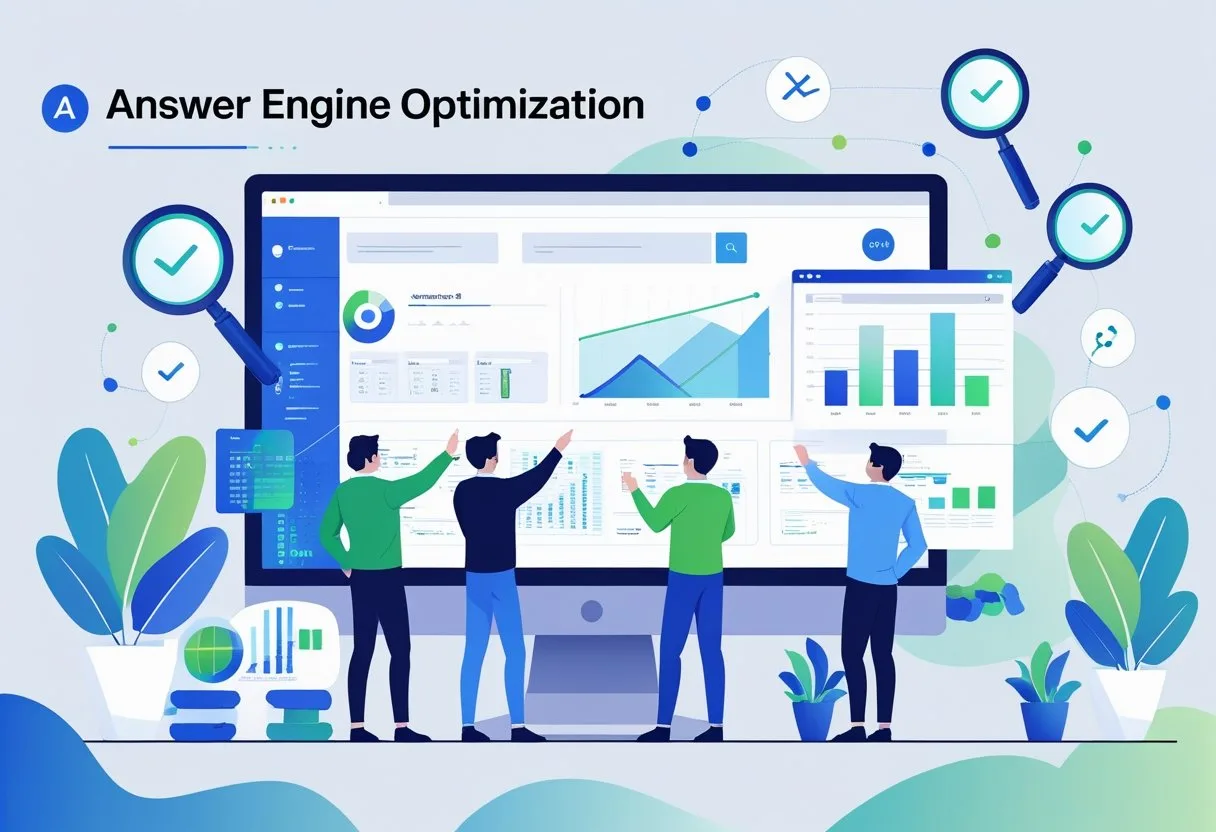
Answer Engine Optimization (AEO) focuses on making web content easy for answer engines to read and display. Unlike traditional SEO, AEO is designed to provide clear, direct answers to questions people ask using devices or AI assistants.
Definition and Key Concepts
Answer engine optimization is a strategy used to create content that responds directly to specific user questions. Answer engines include platforms like Google, Bing, and AI tools such as ChatGPT or voice assistants like Siri. These platforms aim to show instant answers instead of just a list of links.
AEO works by ensuring content is clear, well-structured, and easy for machines to understand. This means using short paragraphs, bullet points, numbered lists, and labels like FAQs. Using schema markup helps search engines understand the purpose of each section.
A successful AEO approach focuses on user intent, so it predicts what questions users might ask and delivers exact and short responses. This method supports higher chances for content to appear in featured snippets or answer boxes on search results. To learn more about the basics, see this explanation of answer engine optimization.
How AEO Differs from Traditional SEO
AEO and traditional SEO are closely related but not the same. SEO aims to boost website rank in search results, often relying on keywords, backlinks, and long-form pages. In contrast, AEO centers on supplying the best possible answer as quickly as possible.
While SEO can drive users to websites by ranking on search terms, AEO targets answer engines that pull direct responses. Users may get answers without clicking on any links. This means content must be precise, trustworthy, and designed for machines instead of only people.
Some main differences include:
- Keyword Focus: SEO targets broad keywords; AEO targets clear questions.
- Content Structure: SEO favors long, in-depth pages; AEO uses summaries, lists, and structured data.
- User Experience: SEO brings users to a website; AEO often satisfies queries right in the search result or AI answer box. For more on these differences, read about how AEO changes content strategy.
The Evolution of Search Engines
Search engines have changed a lot in recent years. In the past, traditional search engines ranked web pages based on keywords, inbound links, and a page’s relevance. Now, with the growth of AI-powered answer engines, the focus has shifted to providing instant answers.
Voice search and digital assistants are leading this change. People now expect to ask full questions and get immediate, short responses. AI search engines, like those in smart speakers and phones, depend on well-structured data and context.
To keep up with these changes, businesses and content creators must use AEO strategies. This means structuring content to meet how answer engines process information and respond to questions. Detailed insight about this trend is available in a guide to AEO and modern answer engines.
Key Features of Answer Engine Optimization

Answer Engine Optimization (AEO) focuses on helping websites provide clear, accurate answers that are easy for answer engines and AI to understand. For success, content must not only be well-written but also technically structured and aligned closely with what users are searching for.
Structured Content and Markup
Well-structured content makes it easier for answer engines to understand and display relevant information. This often involves using schema markup and other forms of structured data, which let search engines recognize and pull out key facts from a page.
Examples of useful schema types:
- FAQ
- How-to
- Product
By adding structured markup, websites can improve their chances of being featured in knowledge panels, featured snippets, and answer boxes. Proper markup also supports Q&A formats that help engines match answers to specific user queries. Read more about the importance of content structuring in this AEO guide.
Providing Direct and Concise Answers
Answer engines favor concise answers that address questions directly. Content should be clear and to the point, focusing on delivering solutions or facts in a format that is easy to extract and present. Using short paragraphs, bullet lists, and tables can make answers more readable and accessible.
Writers should avoid unnecessary information or complex language. Bullet points, step-by-step lists, and single-sentence answers are often used for common questions. Voice assistants and AI tools often choose content that is direct, so being brief and specific is key for visibility. See more about packing direct value into your answers in this best practices guide for AEO.
Authority and Trust Signals
Search engines and answer engines rely on authority and trust signals to decide which sources to use for answers. Sites that display expertise, experience, and trustworthiness often rank higher and are more likely to be featured.
Key ways to boost authority and trust:
- Display real author names and credentials
- Cite reputable sources and data
- Include updated, accurate information
- Show external recognition (awards, mentions)
These practices support the E-E-A-T signals (experience, expertise, authority, trust) that answer engines now watch for when evaluating content as highlighted in recent AEO trends.
Optimizing for User Intent
Understanding user intent is critical for AEO. Content must match not just keywords, but also the real questions and needs behind each search. This includes focusing on both long-tail queries and conversational language users might speak or type.
It helps to analyze the types of questions users ask and the answers they prefer, then structure content to deliver clear, specific solutions. Knowing if a query seeks a summary, a detailed step-by-step process, or quick facts helps shape the best response. Learn more about aligning content to user intent from this comprehensive guide to AEO.
Content Strategies for AEO
Creating content for Answer Engine Optimization (AEO) means focusing on clear and direct answers, easy-to-read formats, and natural language. Successful strategies use structured responses, helpful formatting like lists and tables, and language that matches how people really search for information.
Crafting Structured Answers
Structured answers should get straight to the point. They need to provide value for both the reader and answer engines. The best approach is to begin with a clear statement that fully addresses the user’s question.
Writers can use methods like the inverted pyramid, starting with the most important information. After the main answer, it helps to add context or examples. Using schema markup like FAQPage or HowTo can make answers even more visible in AI and search results.
Clear and direct statements are easier for answer engines to find. Well-crafted structured answers lead to featured snippets and direct responses in answer engines. Linking to reliable sources or adding a short list of relevant resources also builds trust with users.
Formatting Content: Lists, Tables, and FAQs
Breaking information into lists or tables helps people and answer engines scan for answers quickly. Bullet points are useful for step-by-step instructions, item lists, or benefits. Numbered lists work well for ordered processes like recipes or how-to guides.
Tables present data comparisons, features, or statistics in a simple layout. For example, a table can compare pricing, specifications, or nutritional facts.
FAQs use a list of common questions and answers. Adding FAQ sections to content increases the chance of being featured as a direct answer. Including structured FAQPage markup helps AI search engines recognize these lists as helpful, relevant responses.
Using Conversational Language and Queries
Answer engines use natural language processing to match search queries with answers. Writers should use a conversational tone, similar to how people ask questions aloud.
Targeting long-tail keywords and conversational queries, like “How do you fix a flat tire?” or “What does AEO mean?” can reach more voice and AI searches. Phrasing titles and headings as questions is helpful.
Content should avoid jargon or complex words. Short, simple sentences are easier for both people and answer engines to understand. Using language that fits real-life searches increases the chance of appearing in AI and direct answers.
AEO for Voice Search and AI Assistants
Voice search is changing how people get information online. As users rely on smart speakers and AI assistants, it is essential to tailor content so it delivers direct, clear answers through these platforms.
Optimizing for Voice Search Results
Voice search works differently than traditional search engines. People are more likely to use natural, conversational language. Questions tend to be longer and more specific, such as “What is the weather like today?” instead of just typing “weather.”
To succeed, websites should focus on using question-based keywords and full sentences. Structuring content with short, clear answers helps AI-driven engines pull the most relevant responses. When content is direct and uses simple language, it increases the chance of being selected for voice search results.
Some of the best practices include:
- Including FAQs with real questions and answers.
- Writing headers as questions users might ask.
- Keeping paragraphs short and focused.
In summary, matching the phrasing and intent of typical voice searches is key to answer engine optimization in this area. As voice search continues to grow, these practices will become even more important for reaching users.
AEO and Conversational Interfaces
Conversational interfaces, like chatbots and AI-powered virtual assistants, use natural language processing to understand spoken and written questions. Siri, Alexa, and Google Assistant all rely on this technology to interpret and answer queries.
For AEO, content that directly addresses user questions improves the chances of being chosen by these interfaces. AI assistants prefer clear language, logical structure, and information that is up to date. It is helpful to format details in lists or steps when possible.
Here are important tips:
- Use structured data to mark up content.
- Prioritize accuracy and trustworthiness.
- Target common questions about your topic.
By organizing information to meet the needs of conversational technology, a site makes it easier for AI-powered search and assistants to deliver accurate answers. More about these trends can be found in AEO strategy guides.
Compatibility with Voice Assistants
Compatibility means making content accessible and understandable for devices like Alexa, Google Assistant, and Siri. These assistants process audio queries and expect quick responses. Support for voice assistant platforms depends on well-structured content that covers clear, relevant topics.
To reach these devices, content should:
- Use schema markup for lists, facts, and instructions.
- Be mobile-friendly and fast-loading.
- Address both simple and complex questions users might ask out loud.
If websites are optimized for answer engines, voice assistants can easily select reliable answers to read or speak back to users. This expands visibility across search engines and smart devices, as explained in AEO future of search articles.
Technical Aspects of AEO
Technical precision is key for answer engine optimization. Structured data, device responsiveness, and accessibility all help content perform better in answer engines like Google, Bing, and voice assistants.
Implementing Schema Markup and JSON-LD
Schema markup gives search engines clear signals about what a page contains. Using JSON-LD, a popular format for adding structured data, helps provide context, such as labeling content as a recipe, product, or FAQ.
Well-implemented schema markup boosts the chance of showing up in featured snippets and knowledge panels. Answer engines rely on this data format to understand concise answers and definitions. To get started, use tools like Google’s Rich Results Test and the Schema.org guide for common property types.
Best practices:
- Use json-ld format, as it is recommended by most search engines.
- Mark up key sections, such as titles, questions, reviews, and answers.
- Avoid marking up unnecessary sections to keep code lightweight.
Mobile Optimization for Answer Engines
Answer engines often deliver responses on mobile devices and through voice assistants. Pages must load quickly, use mobile-friendly layouts, and remain clear on smaller screens.
Key steps include:
- Responsive design that adapts to all screen sizes.
- Compressed images to reduce load time.
- Readable font sizes and tappable buttons.
Technical SEO for mobile includes checking that no core content is hidden or cut off on mobile displays. Errors on mobile versions can lead to lower rankings in answer engines, especially since most users now search on mobile or through smart speakers. For more mobile tips, visit this helpful article.
Ensuring Compatibility and Accessibility
For AEO, content must be accessible and compatible with different devices, browsers, and assistive technologies. The site should follow the Web Content Accessibility Guidelines (WCAG).
This means using:
- Proper semantic HTML tags for headings and lists.
- Alt text on all meaningful images.
- ARIA labels for interactive components.
Checking compatibility ensures that answer engines, including voice assistants, can process content without errors. Accessibility checks also help reach a wider audience, making information available to everyone who asks a question online. Consistent code quality and valid structured data play a large part in compatibility success.
Featured Snippets, Answer Boxes, and Knowledge Panels
Search engines now pull content from websites to show direct answers at the top of results. These features like featured snippets, answer boxes, and knowledge panels boost visibility and can drive more traffic by providing quick, clear information.
Optimizing for Featured Snippets
Featured snippets are short sections of content pulled from web pages and displayed in a prominent box at the top of search results. They often answer questions such as “how to,” “what is,” or “why.” To increase the chance of earning a featured snippet, it is important to use clear headings, bullet points, and tables.
A page should answer common user queries in 40-60 words under a dedicated heading. Formatting information in lists or steps also helps. Including concise, easy-to-skim summaries within articles is key so answer engines can easily extract direct responses.
Well-structured content that addresses a specific question often wins the featured snippet spot. It is also important to update existing pages to match current user intent and query trends. Learn more from this featured snippets and answer box appearances guide.
Getting Content in Answer Boxes
Answer boxes, also called direct answers, display quick facts or solutions at the very top of results. These often include facts, dates, summaries, or numbers. Keeping answers brief, factual, and to the point is important. Answer boxes prefer direct, clearly worded statements that answer the searcher’s question immediately.
To increase the chances, include accurate data and relevant keywords next to the main answer. Use schema markup where possible to help search engines understand and categorize information. Questions should be answered in language a middle school student could understand.
Content placed in popular answer spots is more likely to be picked up in voice searches, too. Find out more about optimizing content for direct answers.
Leveraging Knowledge Panels and Google AI Overviews
Knowledge panels appear on the right side of search results and highlight key facts, people, organizations, places, or events. They pull data from trusted public sources and websites. Ensuring that a website’s information is accurate, consistent, and linked to trusted pages like Wikipedia increases the chance of being included.
Google’s AI Overviews are starting to summarize answers using content from different sources, including knowledge panels. To be featured, web content should be trustworthy, up-to-date, and written simply. Using structured data and clear, direct language helps Google’s AI understand and highlight important details.
Consistent name, address, and basic facts across all platforms make it easier for Google to build a reliable knowledge panel. More about these developments can be found in this answer engine optimization guide.
Leveraging Generative AI and Large Language Models
Generative AI and large language models (LLMs) are changing how answer engine optimization (AEO) works. These tools are driving new methods for improving search visibility and user trust through more accurate, relevant answers.
AEO and Generative AI-Powered Search
Answer engines use generative AI to give users quick, direct responses. This shift means AI search and platforms like ChatGPT often summarize or rewrite the information they find. As a result, content that is well-structured, clear, and fact-based is more likely to be used by these systems.
To leverage generative AI for AEO, creators must focus on semantic relevance and cover topics with enough detail. Generative engines reward original insights and easy-to-scan information rather than repeating the same answer or using too much template content. Avoiding duplicated information helps large language models detect intent and relevance more accurately. For details on best practices, Moz offers a clear overview of avoiding repetition and unedited AI content.
Successful AEO now requires understanding that generative AI values trustworthy sources. Content should directly answer common questions and use simple, logical formatting. Lists, clear headings, and concise explanations make information easier for LLMs to process and reference.
Integrating Content with LLMs
Integration with LLMs means creating content that these models can both find and use. The most effective content is written in plain language, uses logical structure, and is designed for generative engines to extract key facts quickly. This makes it more likely to appear in top answers across AI search tools.
High-quality content needs up-to-date information, clear context, and unambiguous statements. Using well-placed keywords related to the topic—while avoiding keyword stuffing—helps LLMs understand and present the content accurately. Pages with FAQ sections, highlighted facts, and detailed explanations support comprehensive coverage.
Website owners should test how their content appears in generative AI tools like ChatGPT. They can do this by entering key questions and analyzing the AI’s responses. GEO (Generative Engine Optimization) techniques like these allow brands to become trusted sources in the evolving AI-driven search environment.
Measuring Success in Answer Engine Optimization
Success in answer engine optimization depends on tracking key metrics, using analytics tools, and making ongoing improvements. Regular measurement shows what works, where visibility is increasing, and how users are interacting with the content.
Key Performance Metrics
The most important way to check if answer engine optimization is working is to look at specific performance metrics. These include impressions, click-through rates (CTR), organic traffic, and the number of times content becomes a featured snippet or answer box.
Tracking phrases targeted by the answer engine strategy helps measure progress. A steady rise in traffic for these phrases usually means the content is being picked up by answer engines. Organic traffic growth from search engines, especially on AI-powered platforms, is a reliable sign that optimization is effective.
A simple table to track key metrics:
| Metric | Description | Why It Matters |
|---|---|---|
| Impressions | How often the page appears | Shows reach in answer engines |
| CTR | % of users clicking through | Reveals content appeal |
| Organic Traffic | Traffic from unpaid sources | Measures search visibility |
| Featured Snippets | Top answers picked by engines | Highlights optimization wins |
Analytics and Content Audit
Analytics tools like Google Analytics can reveal which content is getting attention and where users drop off. Reviewing traffic by page, average time on page, and bounce rates gives insight into user engagement and content quality.
A good content audit checks if articles answer key user questions in the first paragraph and use clear heading structures. Reviewing each page ensures content is direct, answer-focused, and easy for answer engines to interpret. Pages that do not perform can be updated with clear answers and supporting information.
Regular audits help spot gaps or outdated details and show which topics or formats work best. This lets a site focus on what answer engines prefer and remove or fix weak content.
Tracking Trends and Improving Engagement
Following search trends helps content stay relevant. These trends can be found by watching search result changes or using tools that track popular topics and keywords. It is important to update content regularly as search patterns and user interests evolve.
Improving engagement means looking at metrics like average session time, repeat visits, and interactions such as clicks on links or expanded FAQs. Collecting user feedback and analyzing user activity can highlight which answers users find most helpful.
Short paragraphs, clear formatting, and useful visuals make answers easier to read. Sites focused on trends and user engagement are more likely to earn top placements in answer engines.
Competitive Advantage and Digital Marketing Synergy
Answer Engine Optimization (AEO) makes businesses more competitive in searches powered by AI, voice assistants, and advanced algorithm updates. Effective strategies rely on combining AEO with traditional marketing efforts and clear communication to earn trust and attention online.
Integrating AEO with PPC and Other Channels
AEO fits well with pay-per-click (PPC) campaigns and other digital marketing channels. When brands use both, they benefit from quick visibility through ads and long-term search improvements through optimized content. With well-structured answers, paid ads and organic results can reinforce each other.
Businesses can use A/B testing to see which questions and answers in content attract the right searches and match the ad messaging. Targeting the same keywords in both AEO and PPC campaigns helps capture a larger share of relevant search traffic.
Cross-channel reporting makes it easier to understand where paid, organic, and answer-driven results overlap. Combining efforts this way improves the use of marketing budgets and increases the chance of being the top answer in search results. Marketers can track performance across all channels using tools like Google Analytics or other reporting dashboards.
Improving Online Presence and Visibility
AEO helps brands show up in more than just traditional search results. It focuses on being featured in direct answers, voice searches, and AI-powered summaries used by services such as Google’s AI Overviews. These formats are becoming more popular, and optimizing for them can expand a company’s online presence and visibility.
Clear, accurate answers increase the chances of being chosen by AI-driven tools and result in higher rankings. Companies that adjust their web pages for common customer questions are more likely to become the default choice for smart assistants and automated agents.
Table:
How AEO Improves Visibility
| Method | Result |
|---|---|
| Featured snippets | Highlighted at the top of results |
| Voice search answers | Chosen by AI assistants |
| AI summaries | Used in auto-generated responses |
Enhancing Customer Satisfaction and Transparency
Well-executed AEO focuses on giving clear, direct answers that address real user questions. This makes it easier for customers to find trustworthy information without clicking through multiple pages. Reducing confusion and saving time can boost customer satisfaction.
Listing precise facts, using easy language, and updating content regularly helps maintain transparency. Customers feel more confident in a business that shares helpful, correct, and accessible details. Improved customer satisfaction and transparency also support repeat visits and stronger loyalty.
Brands that give quick and honest answers earn trust faster, which is essential in digital marketing. Good AEO practices set a foundation for lasting relationships with users and help separate a business from less reliable competitors.
Frequently Asked Questions
Answer engine optimization helps websites respond directly to users’ questions, increasing visibility for automated searches. Businesses use strategies, tools, and agency support to improve user experience, gain trust, and compete for top spots in search results.
How can one effectively optimize content for answer engines?
Content should be written in a clear, direct way that answers specific user questions. Adding FAQ sections and using simple language helps answer engines understand and share content. Focusing on popular questions and structuring information in easily scannable formats increases the chance of being featured in answer boxes and voice search.
What tools are essential for implementing answer engine optimization strategies?
Keyword research tools help identify common questions users ask. Tools like SEMrush and Ahrefs track search trends and spot long-tail queries. Content optimization platforms review text for clarity and formatting, ensuring information is delivered in a format suited for answer engines. Some businesses also use AI-driven platforms to analyze and rewrite content for higher visibility.
What are the key differences between answer engine optimization (AEO) and search engine optimization (SEO)?
AEO focuses on providing direct and quick answers for user queries, especially those looking for featured snippets or voice search results. SEO aims to improve a website’s overall ranking and traffic from different types of searches. While SEO builds broad site visibility, AEO targets specific answer formats and user intent in a focused way. More details can be found about this distinction from Simplilearn’s complete guide.
What are the benefits of obtaining an answer engine optimization certification?
An AEO certification shows knowledge in crafting content that meets the needs of modern answer engines. It helps professionals prove their skills to employers or clients and gives them an edge in the job market. Certification can also lead to better understanding and use of the latest tactics for AI-driven search.
In what ways do answer engine optimization agencies help businesses improve their online presence?
AEO agencies analyze company content to find gaps in answering customer questions. They rewrite and restructure web pages to match the formats favored by answer engines and featured snippets. These agencies also stay updated on changing algorithms and trends, making sure content is always optimized for new ways people search online, as described on Outreach Monks.
Can you provide examples of successful answer engine optimization tactics?
Adding question-based headings and direct answers to top queries helps content stand out in featured snippets. Businesses often create dedicated FAQ pages and use structured data markup to signal answers to search engines. Long-tail keywords and conversational language also boost the chances of ranking for AI-powered answers, as explained in this quick guide.